Does Swimming Build Muscle?
Swimming is a brilliant exercise that has many cardiovascular benefits and is a great full-body exercise. But many people still wonder: Does swimming build muscle? The short answer is yes, swimming can indeed contribute to muscle growth.
This blog post will ‘dive’ into the benefits of swimming as a workout, focusing on its effectiveness in building muscle, the muscle groups it targets, how it compares to other forms of exercise, as well as some practical tips for maximising muscle growth.
How Swimming Compares to Other Forms of Exercise
Let’s look into how swimming compares to other forms of exercise.
Resistance Training: Like weightlifting, swimming provides resistance – as the water acts as a form of resistance. But it does so in a way that is gentler on the joints and bones. This makes it a sustainable option for long-term fitness
However, the resistance felt by the water is obviously minimal compared to weight lifting, so if you are looking to really bulk out, weight lifting over swimming is the answer!
Cardiovascular Benefits: Swimming is an excellent cardiovascular workout, comparable to running or cycling, but with the added advantage of full-body engagement.
Running is a great cardio workout, but the impact of your feet on the ground can cause issues with your knees over time. The benefits of swimming are that it is easier on your joints and is a safer exercise if you are recovering from an injury.
Flexibility and Range of Motion: Unlike many traditional weightlifting exercises that focus on specific muscle groups, swimming requires a wide range of motion, improving overall flexibility.
What Muscles Does Swimming Work?
Depending on the stroke you use, swimming targets a variety of muscle groups. Let’s break down the primary muscle groups worked by different swimming strokes.
Front crawl
The front crawl uses the whole body and is a rather balanced stoke. Depending on the swimmer’s style the upper body is mainly used to propel the swimmer forward.
Core muscles used for front crawl
- Shoulders and arms: Deltoids, biceps, triceps
- Core: Abdominals, obliques, lower back muscles
- Legs: Quadriceps, hamstrings, glutes, calves
Backstroke
Out of all the strokes, the back stroke really works the latissimus dorsi muscles.
Core muscles used for backstroke
- Shoulders and arms: Deltoids, latissimus dorsi, triceps
- Core: Abdominals, lower back muscles
- Legs: Quadriceps, hamstrings, glutes, calves
Breaststroke
The breaststroke is mostly powered by the legs compared to the other strokes – making it a perfect stroke to build on your leg muscles. It is also a great stoke to work the chest muscles.
Core muscles used for breaststroke
- Chest and Shoulders: Pectorals, deltoids
- Core: Abdominals, obliques
- Legs: Inner thighs (adductors), quadriceps, hamstrings, glutes
Butterfly
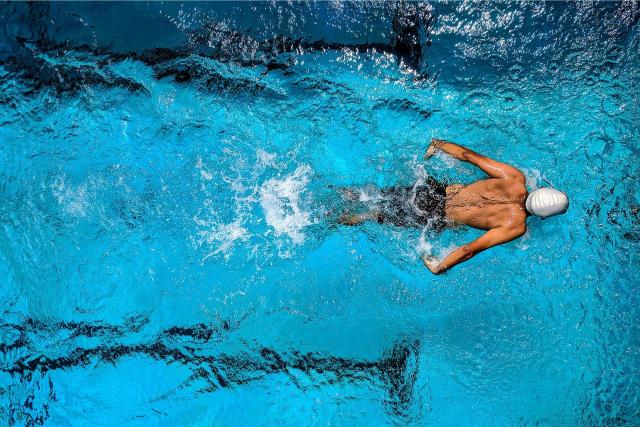
The butterfly is regarded as one of the most challenging of the main swim strokes. This stroke mainly uses the arms to propel the swimmer forward.
Core muscles used for butterfly
- Shoulders and Arms: Deltoids, biceps, triceps, latissimus dorsi
- Core: Abdominals, obliques, lower back muscles
- Legs: Quadriceps, hamstrings, glutes
Helpful Tips for Maximising Muscle Growth in Swimming
Here are some helpful tips to help you make the most out of your swimming session to help grow muscle:
Incorporate Interval Training
Interval training involves alternating between high-intensity workouts and low-intensity recovery periods. This approach can increase muscle engagement and endurance.
Focus on Technique
Proper technique is crucial for maximising muscle engagement and preventing injury. Consider working with a swimming coach to refine your stroke technique.
Vary Your Strokes
Mixing up different strokes ensures a balanced workout that targets all major muscle groups. It can also keep your workouts interesting and challenging!
Strength Train out of the Water
Complement your swimming routine with other strength training exercises like weightlifting to further enhance muscle growth.
Conclusion
So, does swimming build muscle? Yes it does, but if you are looking for more of a bulk up, weight training would be a better option for you. Having said that, swimming is a comprehensive workout that targets multiple muscle groups while providing cardiovascular benefits and improving flexibility.
By incorporating different strokes, using interval training, and complementing your swimming routine with other resistance training, you can maximise your muscle growth and overall fitness.
Swimming in Bicester
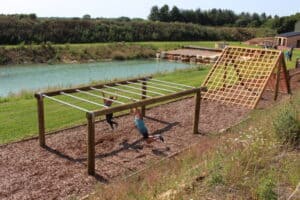
At Bicester Gym, we have an outdoor swimming lake which is the perfect place for a more challenging swim. Or, if you can use our indoor gym at Bicester Hotel for a more ambient swim!
If you want to take a look around our gym and swimming facilities, you can book a tour today and discuss memberships with our helpful team.